


Stay in the loop with the latest news and events from the Sustainable Innovation Ecosystem

Cold condenses on the glass. Droplets form and escape under gravity. Open the bottle. Pressure releases with a familiar hiss. The mouth draws closer. Volatile compounds remain intact. The liquid sparks golden lights in the early eve. The first sip is heaven made suave bitterness at perfect temperature.
Left on the counter, the glass warms and the liquid turns lukewarm. Carbonation disperses. The foam collapses, leaving a thin residue. Bitterness has now faded. Temperature sustains structure.
Freshness fundamentally defines beer quality. Beer is not a beverage that improves with time. From the moment it leaves the brewery, it begins to change. Behind the scenes, brewing science has long established that the central challenge is not how to produce beer, but how to bottle and preserve its freshness. Studies consistently show that drinkers strongly prefer fresh beer, and glass bottles do not cool well in the refrigerator or freezer because of their poor thermal conductivity.
Historically, this was not an issue: beer was consumed close to where it was made, often straight from the cask. With industrial bottling and long-distance distribution, timing became the equation, and freshness demanded solutions.
That is the gap AlmaScience – the collaborative laboratory for cellulose-based materials and green electronics based in Lisbon South Bay – set out to close. In early 2026, Super Bock Group joined AlmaScience’s Sustainable Innovation Ecosystem. The two organizations were not strangers to each other: they had already spent two years on the same lab bench as part of an RRP national research agenda, working on a paper label that cools a bottle in half the usual time. That label is called GELA, and it is now in pilot with Super Bock Group.
What follows is the story of how a beverage company and a materials laboratory arrived at the same problem from opposite ends, and of a brand whose second century is being built as much in a research lab as in a brewery.
GELA is a different kind of cooling. It is a cellulose-based structure. It is renewable and lightweight, designed for low environmental impact. Water activates the material: it works like an ordinary label, but as you wet it and put the bottle in the fridge, heat moves faster. The bottle cools with up to 50% shorter cooling time. The glass surface reaches its serving temperature.
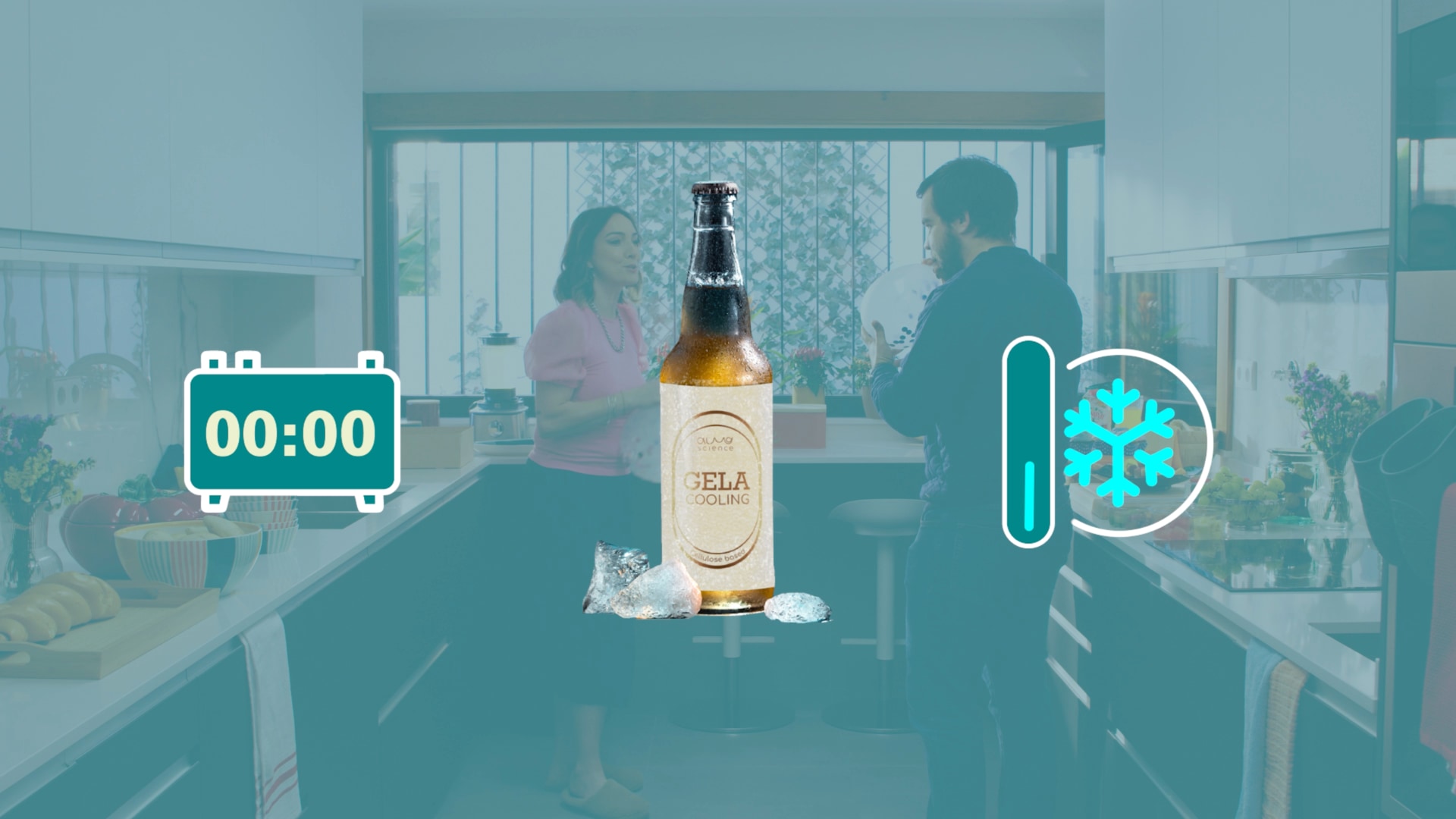
Thanks to this simple, sustainable material, the refrigerator works less. The wait becomes shorter too, and the footprint lighter. No compromise is made between time and temperature; GELA is a smarter solution for existing systems with a low-cost layer, for the blond liquid to turn cold faster.
Developed by AlmaScience and Super Bock Group in the context of the FF2F – From Fossil to Forest RRP mobilizing agenda, GELA transforms cellulose into a cooling interface with no complex machinery or infrastructure involved. Built around efficiency, accessibility, and reduced resource use, it is material intelligence applied to an everyday moment. Science does not change the beer. It protects the moment when beer is at its very best – ice-cold perfect.
A laboratory result and a product are different things, and the distance between them is measured in production lines. GELA is now being piloted with Super Bock Group: tested not on a bench but against the volumes, the logistics, and the handling that a national beverage company actually puts a label through.
GELA started as a question about a material: can cellulose move heat well enough to cool a bottle? It can, and it does it in a layer that behaves like an ordinary label, printed and applied like any other. Having Super Bock Group put it into a pilot is what turns a result into a product, because they bring the volumes, the logistics, and the consumer that we cannot reproduce in a laboratory. The cooling label is the first application, not the last. The same principle holds wherever the cold chain has to work harder than it should – transport, retail display, food distribution. That is where we expect this to go next.
– Luís Pereira, Chief Technical Officer, AlmaScience
For Super Bock Group, the Ecosystem is a way of reaching technologies it could not develop alone.
This partnership with AlmaScience allows us to explore and develop emerging technologies with the potential to transform Super Bock Group's processes, products and business models.
– Tiago Brandão, R&D Director, Super Bock Group
This collaboration with AlmaScience demonstrates our strategic commitment to sustainable innovation and to the creation of value for society.
– Graça Borges, Director of Communication, Institutional Relations and Sustainability, Super Bock Group

Today, Super Bock Group is much more than a brewing company. It is a beverage company with a vast catalogue of soft drinks with brands pervasive in all strata of Portuguese life. At its core: freshness, reuse, and recyclability.
Think of Super Bock Mini. The concept of mini bottles was introduced back in 2009 with a convenient, easy-opening, no-bottle-opener-needed cap as its major selling point, but it was embraced by consumers as a way of drinking shaped by Portuguese climate and outdoor lifestyle: simple, portable, always fresh.
Or take another Portuguese signature, Pedras, the green bottle of sparkling water, best on the rocks with a slice of lemon, and even available in a range of flavors like lemon, tangerine, and passion fruit. Land in Lisbon or Porto, and you'll notice it on every dining table, kiosk, and in packs at supermarkets, everywhere across the country from north to south.
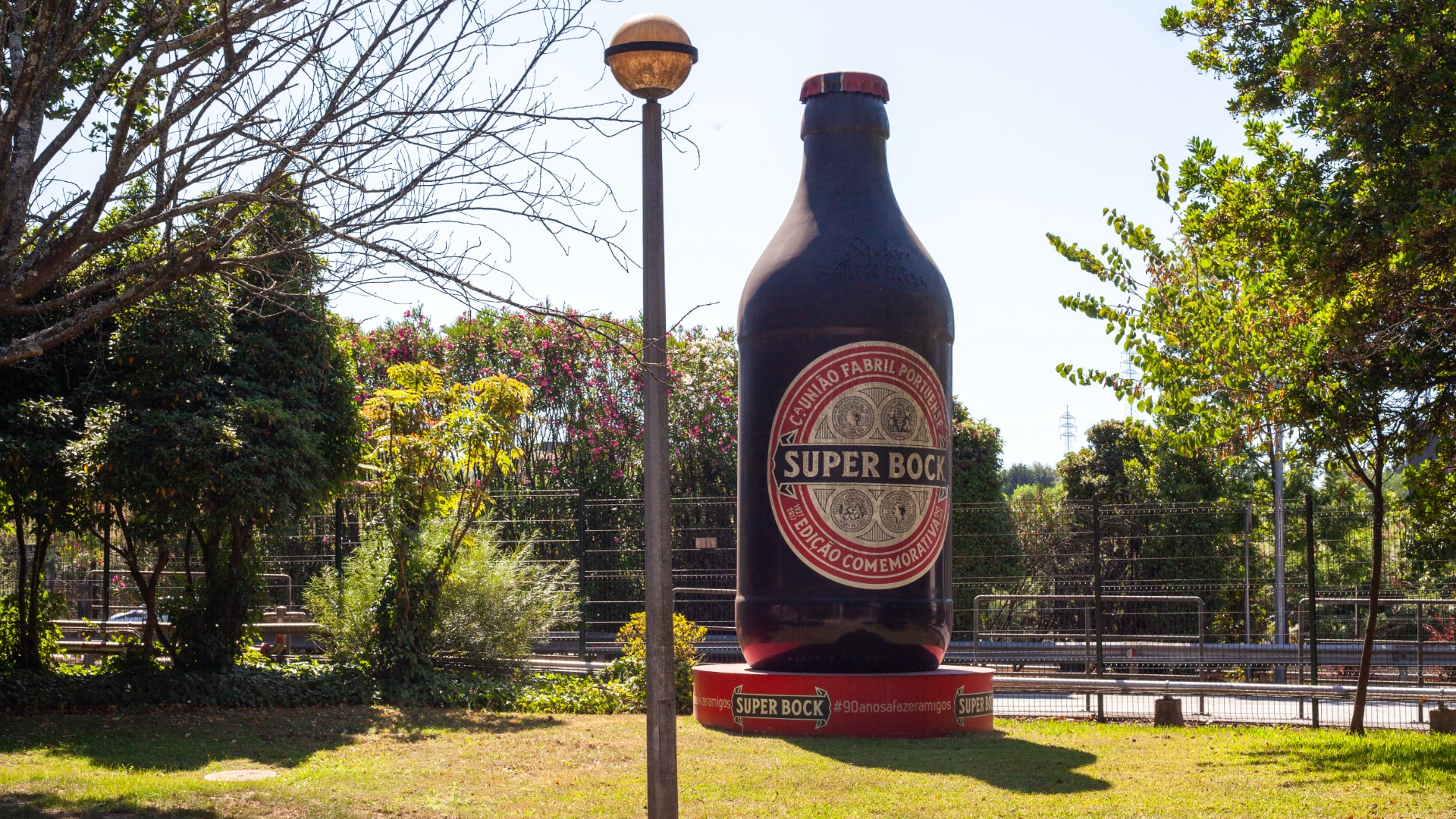
Super Bock Group is headquartered in Leça do Balio, in the municipality of Matosinhos, in the Porto metropolitan area. The factory and administrative buildings stretch in the sun while trucks enter, pack or unpack, and promptly leave. A ballet on wheels. If the scale is industrial, there is something peaceful in the setting. Buildings are surrounded by the green of nature and planted beds of flowers. An urban design by the early owners kept alive over a century. Wide solar projects cover hundreds of square meters across the site.
On the exterior of the automated warehouse, you'll find a giant mural, roughly 3,000 m², created in 2019 by Vhils – aka Alexandre Farto, one of Lisbon's most recognizable artists, famous for his portraits carved with drills and chisels – and Valencia-born artists Pichi and Avo, otherwise known as PichiAvo.
Tiago Brandão leads the Super Bock Group's R&D and innovation strategy. He has devoted 25 years of his life embedded in the company and has played many roles, including HR and management. When we tour the factory, Tiago salutes people by their name. The atmosphere is one of labor, along with a sense of continuity and steady control without ever losing its human measure. That equation between fresh beverage, environmental consciousness, and expertise in analyzing human behaviors is where Super Bock Group holds the stage, using data science to capture demographic shifts.
Our R&D and innovation focus on Super Bock Group as a beverage company, not only as brewery. By volume, we have a beer portfolio; then around 2/5 is made up of still mineral water, sparkling mineral water, flavored sparkling water, cider, soft drinks, and wine in bottle (representing 1% of the market) via Planura, made in South Alentejo. Wine – red, white, and sparkling – is bought and bottled by the group.
– Tiago Brandão, R&D and Innovation Director, Super Bock Group
Innovation is driven by data, which has shaped the spine and the fast-shifting landscape of Super Bock Group from its infancy. Data and consumer behavior sit at the core of the company's decision-making.
Portugal is a small country aware of its limited natural resources and prompt to preserve coastal landscapes largely unspoiled by the mass tourism that has affected other southern destinations. The same goes for recycling and the application of zero-waste policy.
Since August 10, 2026, when Volta's deposit-return system transition period ended, every single-use plastic or metal drinks container of up to three liters newly placed on the Portuguese market must carry the Volta mark and its 10-cent deposit – though stock placed on the market before that date may still be sold, deposit-free, until it runs out. The scheme attests to the country's driven and forward-thinking efforts in circular economy and sustainable growth.
Super Bock Group has utilized and commercialized returnable, multi-use glass packaging since its inception, with its foundational brand Super Bock dating back to 1927 and the corporate entity tracing its roots to 1890. The factory is a testament to this organized return system, integral to the industrial operations since the inception of their bottled beverage distribution.
Super Bock Group's concept of a “returnable bottle” delivered to cafés, bars and restaurants allows each bottle to have multiple lives through a process of collection, transport, cleaning and refilling. The consumer's active choice to return empty bottles contributes effectively to a continuous and sustainable loop of natural raw materials that helps the planet and gives the Super Bock glass a new life.
Even the production of new Super Bock Group’s returnable bottles uses 59% recycled glass.
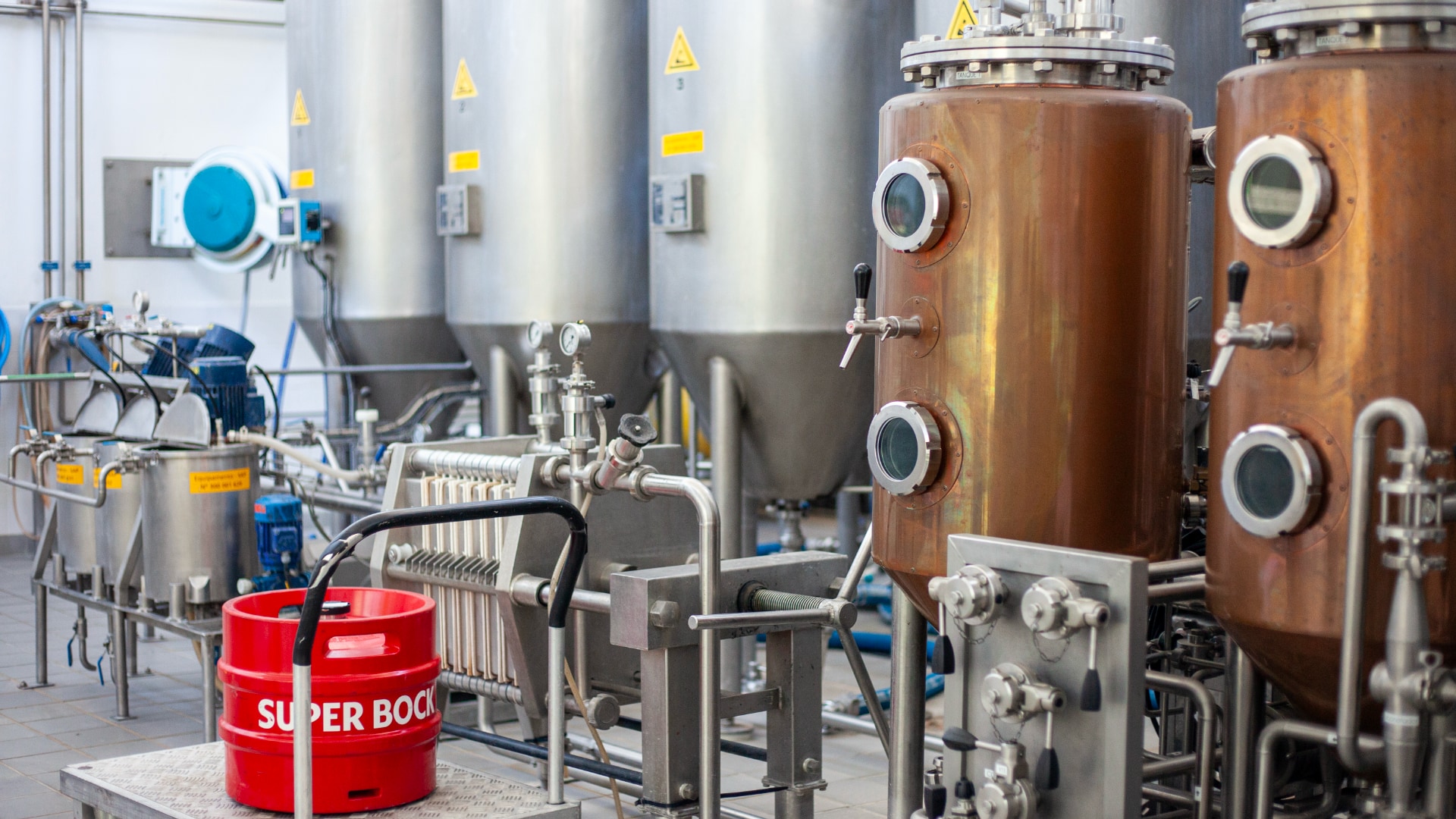
When delivered to high-volume customers or specific events, Super Bock beer brand is even lighter, with over 350 points of sale where beer is served in a “beer drive” format – straight from the source to the glass – making the bottle vanish entirely. The golden craft is transported in tanker trucks and transferred into tanks at each location. The zero-waste policy of this streamlined, minimal workflow stands far apart from the saturated use of packaging and branding that polluted the planet over just one century of capitalistic growth.
For those who need to carry barrels, the brand's barrel format offers another sustainable transportation option. Its large volume makes transport and logistics efficient, with materials that are highly durable and designed for recycling and longevity.
Always trust small countries. They have more to prove with fewer natural resources. They require national cohesion and reverberant strength, with distinctive heritage to shoulder their tiny space onto the world stage. Portugal's Age of Discovery proved that a small country could build an empire through oceans and seas without conventional thinking and land grab.
Porto and its century-anchored industrial heritage in beverages – with beer and Port and Douro wine as its gold-like flagships – appealed to the Scandinavian credentials in brewing, which, like Super Bock Group, shifted from a local craft into a scientific and industrial practice in the 19th century.
Carlsberg, founded in 1847 by Jacob Christian Jacobsen in Copenhagen, adopted scientific methods such as the production of Bavarian-style bottom-fermented lager, which required controlled temperatures, improved hygiene, and a deeper understanding of fermentation.
Carlsberg's heritage reflects a broader Scandinavian tradition in which industry, architecture, science, and civic culture were closely connected. The original brewery site included laboratories, gardens, and architectural landmarks that expressed the 19th-century belief in progress through knowledge and design.
Strength in heritage allows a shift to strength in innovation and culture. Portugal and Denmark have both invested in R&D around green tech innovation, trusting startups and talent to be economic and cultural drivers.
In 1876, Jacobsen established the Carlsberg Foundation to support scientific research, reinforcing the idea that brewing could contribute to wider society. Denmark places its model of design and tech, independent cinema, and beer culture as a model of effective and peaceful social democracy.
Carlsberg has been present in Portugal through Unicer since 1992, first as a licensed brand and later as a shareholder.
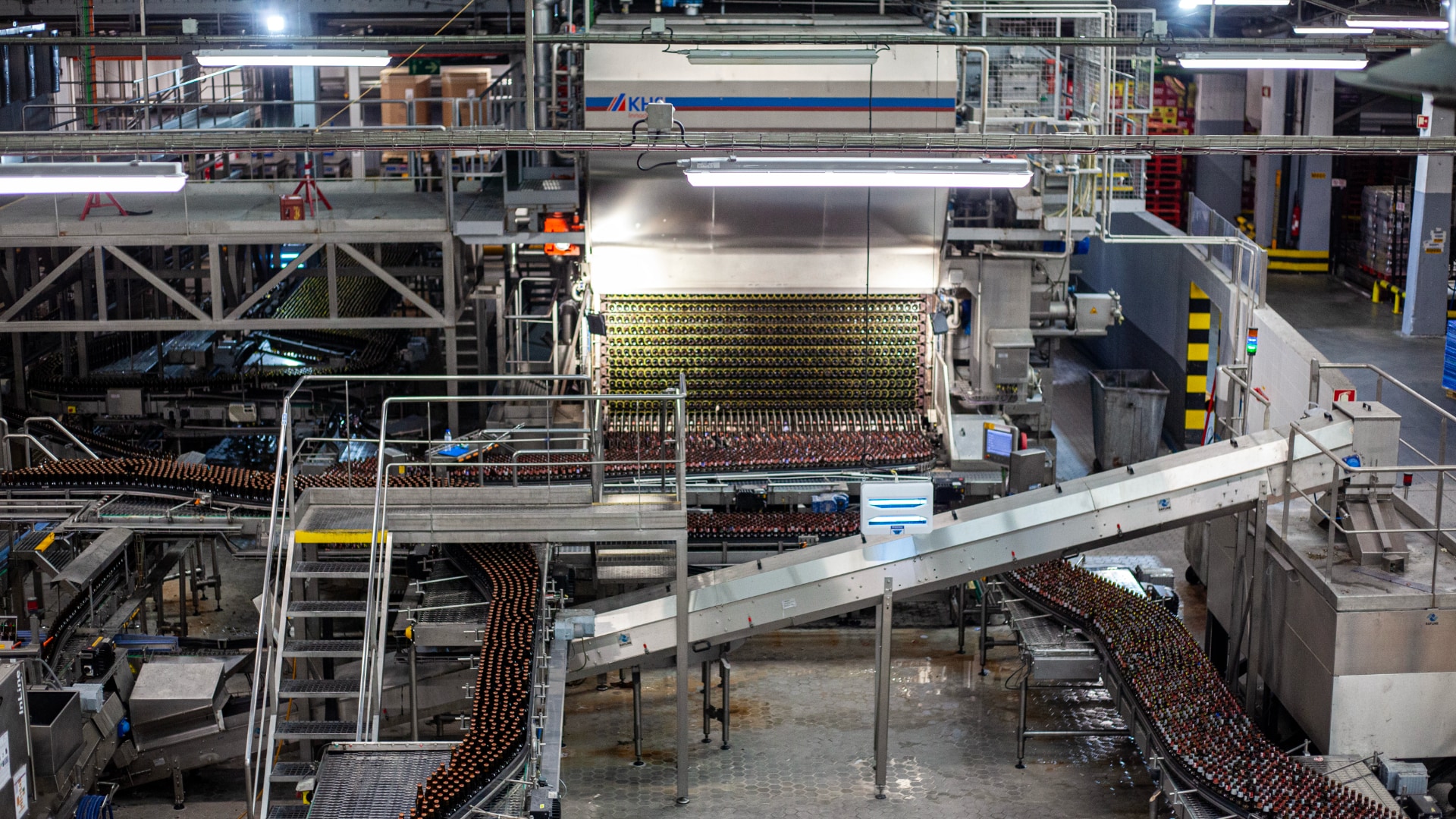
Carlsberg's parentage of Super Bock gives the group access to excellence in packaging R&D and support for its own €80M decarbonization spend from 2022 to 2030. The results are already visible: returnable glass bottles with 50–60% recycled content, SDR Portugal founding membership, and the Vitalis 100% rPET bottle, which entered the circular packaging system with existing plastic continuously reprocessed into new bottles, reducing reliance on virgin materials.
With a common outlook toward the preservation of nature, Super Bock Group and its parentage invite consumers to enjoy every moment together to the fullest, pairing brand daily actions with individual care and preservation rather than waste.
For the green economy to close its loop, the last step must be as precise as the first. With GELA, the cellulose wrap around a cold bottle of Super Bock is more than packaging innovation. It is the full argument made tangible: renewable material, reduced energy, lighter footprint, and a drink that arrives at the glass exactly as it was meant to – ice cold and uncompromised. Here science does not change the beer. It masters the moment.
Two casually groomed Portuguese boys in their late 20s line up at Lisbon's mini market facing Praça das Flores (which translates to “Square of Flowers”), also known as PDF in youth vernacular, to ease text messaging. The square is in São Bento, in central Lisbon. It has the perfect dimensions of a village square. Leafy and chilled with its benches circling a fountain, it is surrounded by cafés, restaurants, bars, an always busy kiosk and, at the corner, a mini market where the boys line up.
In the past few years, the square has organically become a totemic meeting roundabout for the colorful youth residing in Lisbon and whoever passes by. Originally, it was one of the preferred praças where locals walked their dogs, read papers, sipped wine smuggled out of their nearby kitchen. It still has that same demographic along a joyous riot of kaleidoscopic crowds who somehow invaded their doorsteps. Truthfully though, it looks like a celebration of collective urban life.
Standing behind the boys picking up two Super Bocks each, I dare ask: “Which beer should I choose? Super Bock or this other one?” One boy promptly answers while placing his Super Bocks in a tote bag: “The other one is your weekday beer. Super Bock is what you drink on weekends.” Fairly similar pricing. Different brand perception. Beer dominates, as well as white and rosé wine to spark pretty pictures around the fountain.
Tiago Brandão offers a metaphor: “Who taught you about wine? In Europe, it will most likely be a family thing. Beer is different. It's about you being a young adult together with your friends.”
Beer matches everyone's budget. It permeates budget and class systems through a wide range of prices, securing inclusion across a range of tastes. The same goes for Praça das Flores. The success of the location is its range of offers in beverages and takeaway or outdoor dining that bring in friends among locals and tourists among residents, with what feels like a heartfelt city gem throughout all groups.
Super Bock Group sees friendship as a key value, embracing active routines that respect one another, embracing diversity and tolerance. The same goes for the natural environment we live in and the resources we depend on to sustain an interlaced ecosystem on Earth. Around this clear outlook – human interaction and nature preservation – the group forecasts the future through solid case studies and data science. It helped capture demographic changes in the country as well as sustain actions and fight against waste in daily production.
When rain falls in the Pedras Salgadas Valley in North Portugal, water infiltrates the underground slowly but steadily. It can travel through granite as deep as 1,000 meters. In its journey, it naturally absorbs minerals and carbon dioxide that generate mineral and sparkling water. Somehow, geological transformation recalls in metaphor the enduring creative process and its various pathways that elaborate through human passion, audacity, and endurance as a vector of talent.
Together, geological time and interactions foment circles rippling into movements into communities. In the summertime heat and its far-stretching days and outdoor nights, there is nothing more desirable than fresh drinks – with or without alcohol.
If the sources from which we drink elaborate through slow and natural formations, the process serves as a reminder that sentiments and true feelings – the complex sediments seeding human kindness, tolerance, and love – need their own valuable time to be felt and shared. And over time, they build the essential act of caring for one another.
Through heritage and data sets, Super Bock Group pulls the exact fresh beverages people dream of to cool down. In supermarkets, bars, kiosks, breweries, restaurants, and beach clubs, Pedras waters meet Super Bock Group’s beers on all tables. Together, the brands build Portuguese identity, sustaining everyone's taste and wallet as the company's most consistent brand value architecture.
In choices and inclusion, the Super Bock Group brands happily live at the center of a square, bringing everyone to the center, along riverbanks and post-industrial regenerations where innovation foments its next moves, and as patrons of art institutions where curating artistic talent and exploration of cultures enriches human knowledge and senses.
Super Bock Group has been part of how culture is lived in Portugal for over a century: from where culture happens and people gather to where talent is curated, displayed, and shared for memorable moments in live art institutions and arenas, in parks, on the streets, on beaches and riverfronts.
The brand has built empirical experience after decades of sustaining creative, young adult consumers. It has built its brand fame often by supporting initiatives without the need for loud callouts – a much-appreciated positioning among audiences that respect brands that contribute to events' success rather than plastering branding material everywhere.
In Porto, it is present in Casa da Música, the unmissable art foundation and forest-park Fundação de Serralves, and in Super Bock Arena - Pavilhão Rosa Mota. It also sponsors major live music festivals, among other festivals and national popular festivities.
In Lisbon, the Group supports several film festivals at Cinema São Jorge and São Luiz Teatro Municipal and sponsors the popular marches during the Santos Populares. Super Bock em Stock takes place across Avenida da Liberdade in Lisbon with an array of concerts across different venues in one night or weekend. Finally, Super Bock Super Rock was a live music summer festival with major international headliners near Meco beach, neighboring Arrábida Natural Park. Super Bock Super Rock is now expanding its live music offer toward artist-focused regular experiences without the limitations of a single venue or fixed festival format. The new model officially launched on September 5 and 6, 2026, with concerts by The Weeknd at Estádio do Restelo in Lisbon, as part of the After Hours Til Dawn Tour.
Bike, Uber, or hop on bus 728 towards Lisbon's Beato Innovation District, an industrial playground and one of Lisbon's most forward-looking creative districts, where architect studios, concept venues, art studios, startups, and cultural institutions stretch their cool, shoulder to shoulder. A little brother per se to Williamsburg, Brooklyn, or East London's Hackney, perhaps now closer to the massive King's Cross development in Central London, Beato Innovation District is where industrial plant regeneration meets heritage visionaries, innovation entrepreneurs, and the creative youth mixing with multi-generational locals.
Beato Innovation District is a major redevelopment of a former military-industrial complex into a hub for startups and creative industries. Tech companies share workspace with vast hospitality concept spaces like Praça, a Portuguese delicatessen where kids and dogs run loose; or the vast red-neon-lit vegan taqueria Duro de Matar, blending Mexican dishes with DJ sets; or the recently opened Casa Capitão, a temple for live music with four floors dedicated to cultural and live art immersion.
Now look up, and you'll read “The Browers” on an industrial tank coiffing an impeccable building regeneration.
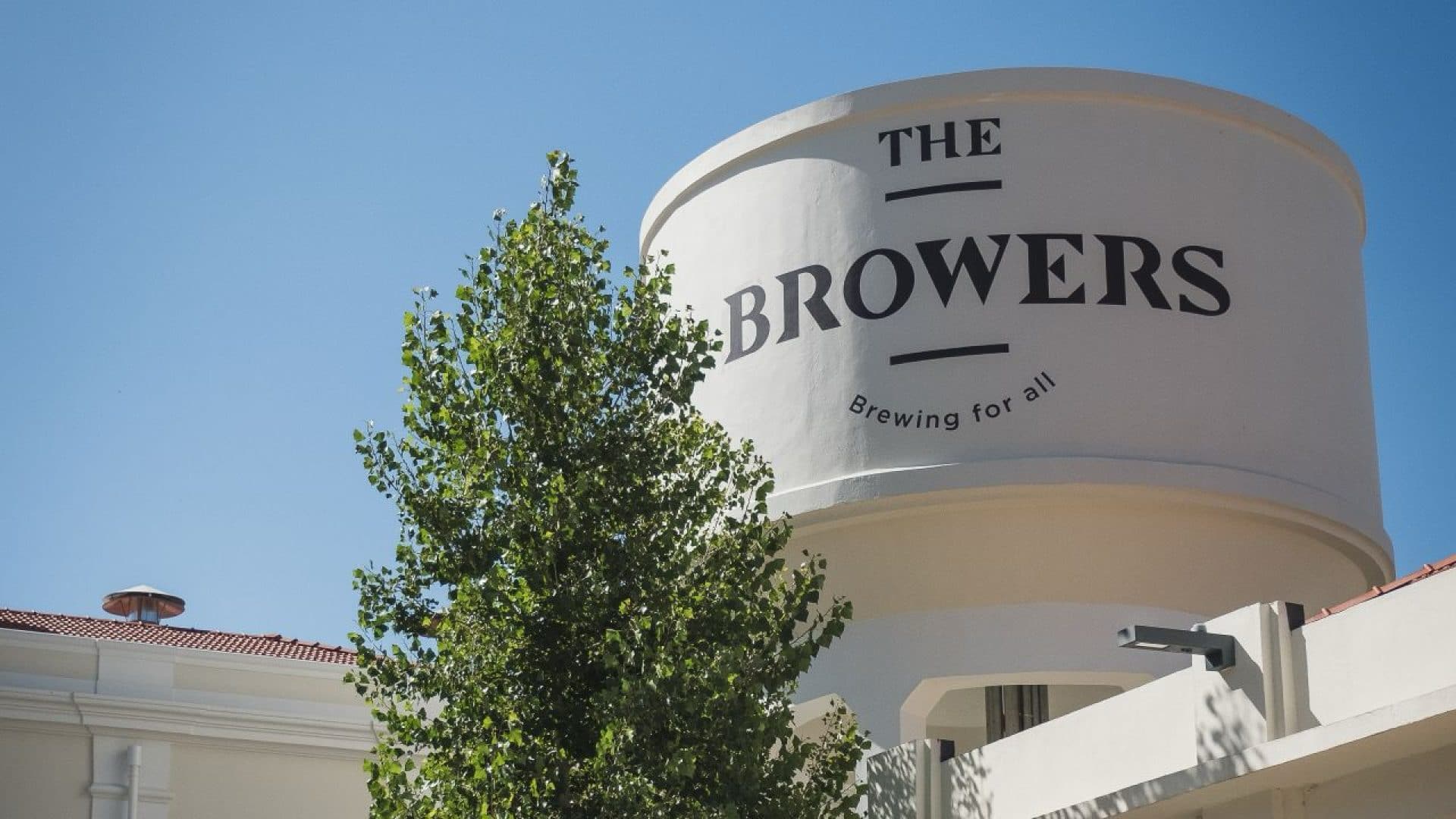
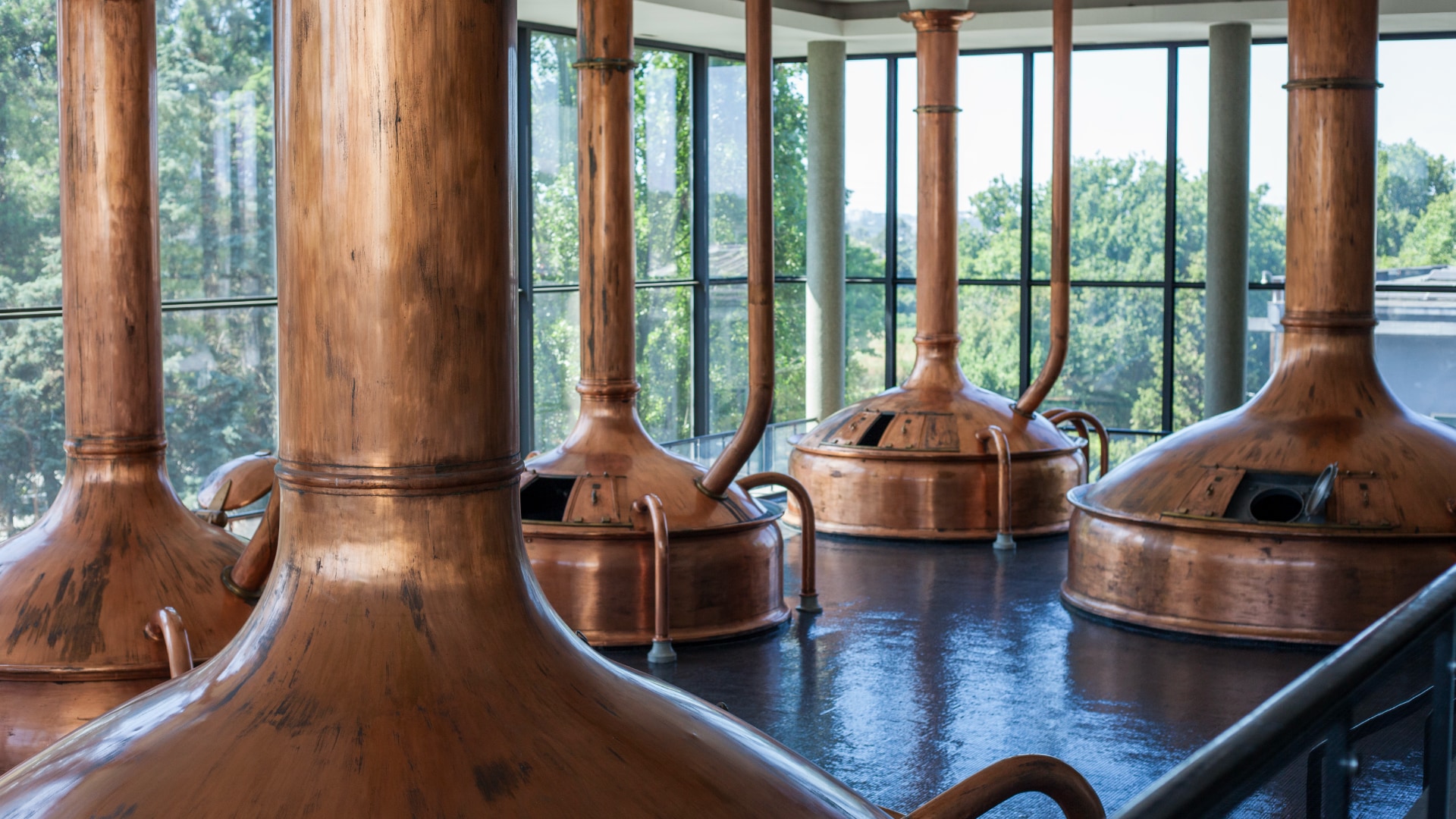
Founded in 2018, The Browers Company is a private company created by the Super Bock Group as a new business model responding to changes in the beer market. Conceived to diversify beer production and consumption through small-scale brewing and collaborative production, it sustains cultural and educational events around brewing.
In late 2024, the craft beer company opened a massive 700-square-meter hybrid space hosting a brewery, restaurant, and event space in Beato Innovation District, in partnership with Lisbon City Council and Startup Lisboa. Architects Eduardo Souto de Moura and Nuno Graça Moura commented on the regeneration project, featuring many original parts of the building and stainless-steel equipment repurposed: “they will be treated and reused, or reconstructed, although with the introduction of double laminated glass, for thermal and acoustic reasons”. The project received an award in the 2025 edition of the National Urban Rehabilitation Award.
The venue is a venture and laboratory where Super Bock Group's own craft and cultural brewing arm converge. Defined as “a collaborative brand that produces local beers and involves partners, the brewing community and local communities”, The Browers brings its focus on live arts and nightlife from Super Bock's festival sponsorship model to indoor spaces: a permanent, physical brewery, restaurant, and cultural events space in a neighborhood where creatives actually live and work.
Tied to the reinvention of east Lisbon and its industrial lineage, the project leans on the evolution of beer culture and its discovery through a physical space. This project reflects a broader 21st-century shift in brewing from centralized industrial production to localized, innovative microbreweries, where beer tasting is a community-driven experience. Want to watch the World Cup, organize a lunch or dinner for 30 guests, or enjoy an afternoon or night out with your buddies? The Browers is stretching its arms and impressive rehabilitation wide open.
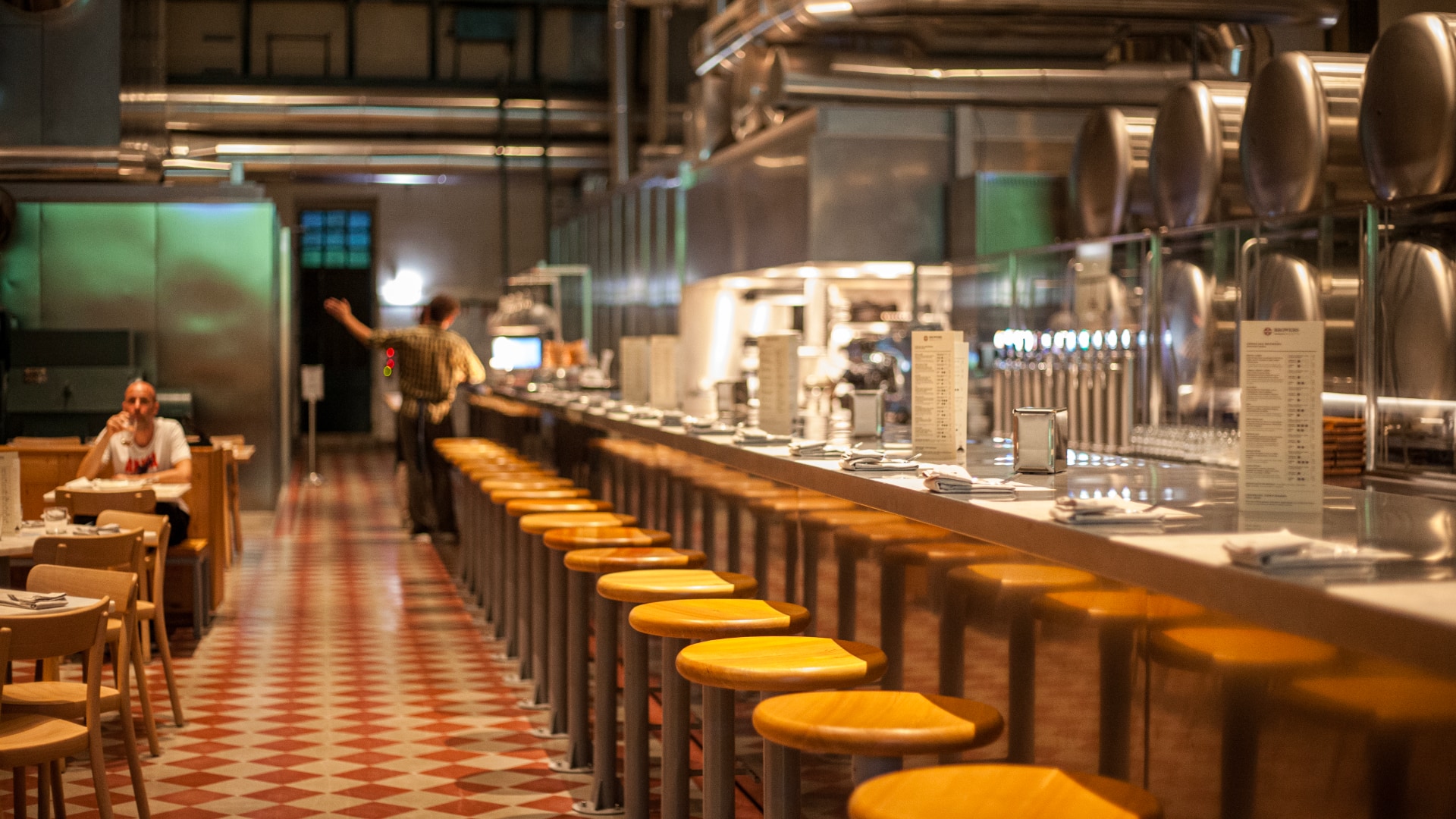
A brewery inside a rehabilitated power station, a cooling label made of cellulose: both are the same instinct applied at different scales: take what already exists, and make it work harder before you replace it.
Consistency in production, research and innovation with sharp analysis of customer data, a sense of culture, and clear brand messages: Super Bock Group has a beverage-brand-value architecture that covers beer, soft drinks, water, and wine – from soft-priced Cristal to craft-premium Selecção 1927 – which made it the commercial leader of beer drinking in Portugal.
Today, the taste of a beverage is much broader than the liquid it carries or the shape of the bottle that holds it. More than at any previous moment in history, people have immediate access to data and a voice to express what they find there. Beneath the experience, layers of ethos, research, honesty, consistent action, and care for the planet enter every composition.
Those who care about sustainability, bottle recycling, zero waste, an enduring Earth, creativity and data science as vectors of innovation, patronage of the arts, and the integrity of corporate parentage in company mergers will consume a GELA-wrapped Super Bock or the premium Selecção 1927. They will drink knowing the bottle will be returned, rinsed, and reused; knowing that a cellulose-based wrap shapes the refreshment innovation; knowing that this brand is actively involved in the advance of science and the arts – not as philanthropy, but as a consistent belief system.
The brands that will flourish in the 21st century will be those that can keep meeting people’s primary functional needs while reassuring them that their choice is a contribution.
– Santiago Gowland, Vice President, Unilever, in Oxford Leadership
In the 21st century, a global consuming brand acts as a cultural anchor, a navigational shortcut through market noise, and a steward of social and environmental responsibility. Beyond selling physical goods, successful global brands must deliver unified digital-physical experiences and stand for shared values that resonate across diverse international markets.
None of which arrives by itself. A returnable bottle is a logistics system; a cooling label is four years of materials research and a pilot line. What Super Bock Group joined in early 2026 is an arrangement for producing exactly that kind of thing: a laboratory where a beverage company, a paper company and a university sit around the same problem. The cold bottle is the visible end of it. The rest is an applied research lab in Lisbon South Bay, and a question about what cellulose can be asked to do next.
For that burst of bubbles to taste so good, and for that brand to become part of daily life and nights of shared joy, one needs the same quality of trust that human relationships call upon when we share, confide, and explore together. Within the circles of human warmth, nothing sustains quite like a brand whose circular promises are made tangible.
This work is supported by the Recovery and Resilience Plan (RRP) and by the Next Generation EU European Funds through the Green Agenda for Business Innovation “FF2F - From Fossil to Forest” (Project nº 8), a consortium led by The Navigator Company, in which AlmaScience collaborates with RAIZ and the Super Bock Group.

AlmaScience is a collaborative innovation R&D lab and a technology incubator for sustainable functional materials and green electronics.

Stay in the loop with the latest news and events from the Sustainable Innovation Ecosystem