


Stay in the loop with the latest news and events from the Sustainable Innovation Ecosystem

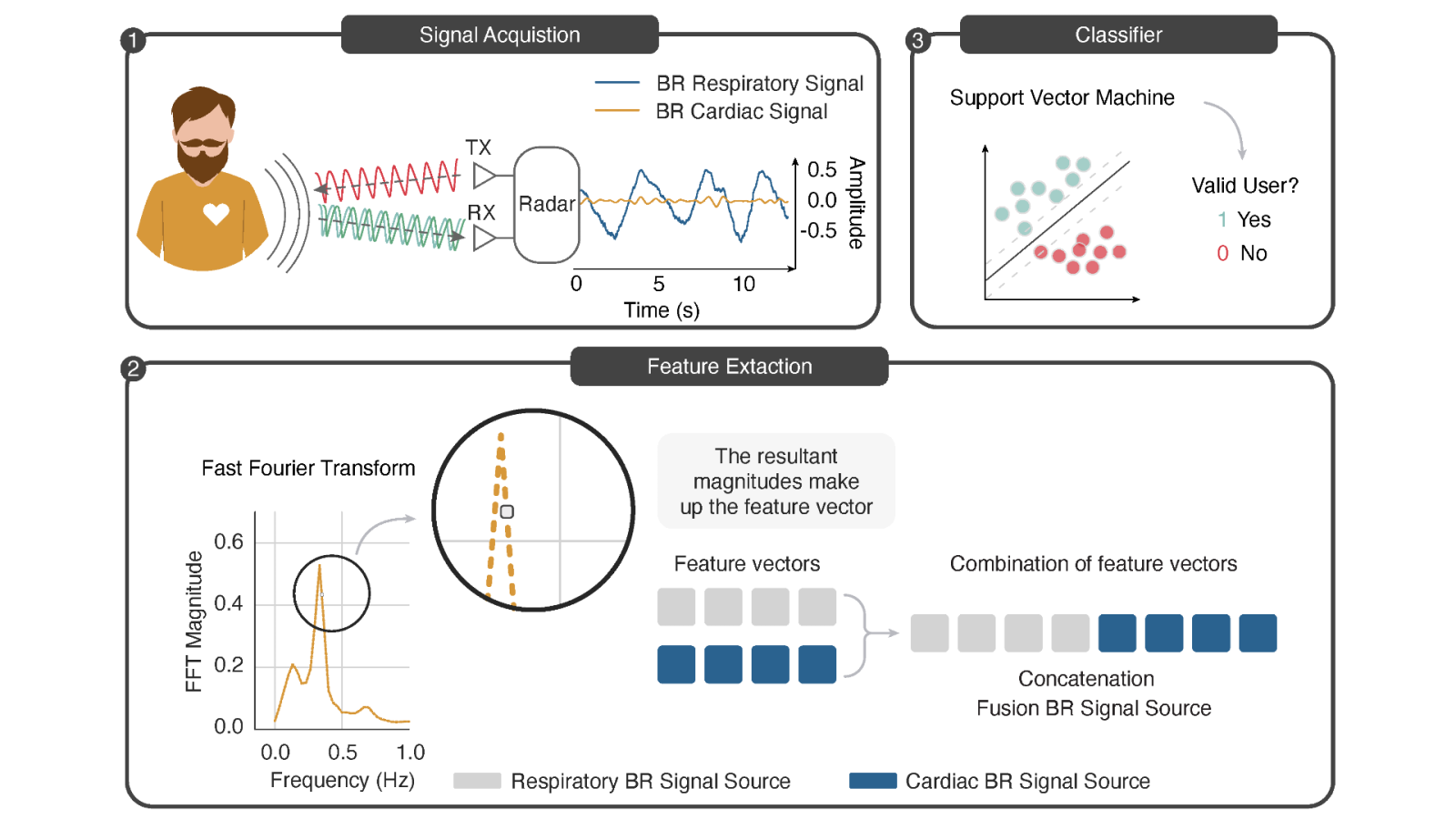
The bio-radar system, useful for remotely monitoring vital signs, has gained popularity in the literature. However, its efficiency across diverse populations considering physiological and body stature variations needs further exploration.
This work addresses this gap by applying machine learning (ML) algorithms—Support Vector Machine (SVM), K-Nearest Neighbors (KNN), and Random Forest—to classify 92 subjects based on gender, age, Body Mass Index (BMI), and Chest Wall Perimeter (CWP). The results showed that the Random Forest algorithm was the most accurate, achieving accuracies of 76.66% for gender, 71.13% for age, 72.52% for BMI, and 74.61% for CWP.

AlmaScience is a collaborative innovation R&D lab and a technology incubator for sustainable functional materials and green electronics.

Stay in the loop with the latest news and events from the Sustainable Innovation Ecosystem