


Stay in the loop with the latest news and events from the Sustainable Innovation Ecosystem

PaperWeight AI is redefining the future of retail through "The Internet of Paper" – a breakthrough in printed electronics that transforms standard shelving into an intelligent data source. Born as a deep-tech spin-off of AlmaScience, PaperWeight AI leverages a proprietary pixel-sensor matrix to detect item presence and weight with scientific precision. By replacing intrusive cameras with ultra-low cost, privacy-safe sensors, the PaperWeight AI smart shelves automate inventory logistics, allowing retailers to shift investment from hardware CapEx to human connection. This is how the "Internet of Paper" makes technology invisible and humanity central.
Challenging the dominant rhetoric of AI replacing humans – a narrative endlessly replayed by the media landscape in 2025 – this essay, set in 2036, offers a speculative narrative of what AI could be assigned to, and what humans could master instead. It's a vision of possibility, not prediction – an invitation to imagine retail's human-centered future.
Maria drives her colorful e-bike and parks in front of her favorite organic mini-market. The logo – an octopus with an infectious smile – feels familiar and playful. All around, Manhattan is performing its usual chaotic opera: delivery drones buzzing in the humid air, autonomous taxis weaving through gridlock, and the relentless pulse of 8 million people moving at speed.
Inside, however, there is a distinct lack of friction.
Food shopping is how Maria starts her weekdays, after dawn runs through Central Park, and it's become her favorite ritual: hunting for fresh food that tells a story.
A passionate and devoted hospitality teacher in a renowned cooking school that quietly launched a decade ago, Maria is an eco-conscious mother of two under twelve, fiercely standing for healthy food, fair-priced items, and raw fish was once the trademark of her successful “cevicheria”.
Maria heads straight for the fresh produce "island" – a curated display of heirloom tomatoes and local greens. There are no frantic stock clerks blocking the aisle with pallets. There are no menacing cameras tracking her retinas. The store feels calm, almost analog. Yet, this serenity is powered by the most sophisticated deep-tech infrastructure of the decade.
The store runs on PaperWeight AI.
Ten years ago, the retail industry was obsessed with "vision." Retailers spent billions retrofitting stores with ceiling-mounted cameras and roaming robots, trying to "see" every customer. It was expensive, intrusive, and structurally complex.
The pivot happened when the industry realized that seeing wasn't the goal; knowing was.
This shift was driven by the commercialization of "The Internet of Paper". Emerging from the rigorous R&D ecosystem of AlmaScience, PaperWeight AI validated a different approach. Instead of complex optics, they developed a pixel sensor matrix – a printable, paper-thin grid that could be applied to any surface.
This technology arrived as a robust, scientifically validated material breakthrough, industrializing years of advanced research into a scalable solution. PaperWeight AI smart shelves respect Maria's privacy by simply feeling the weight change on the pixel matrix to confirm a purchase. It detects item presence, establishing a secure, anonymous environment for the shopper
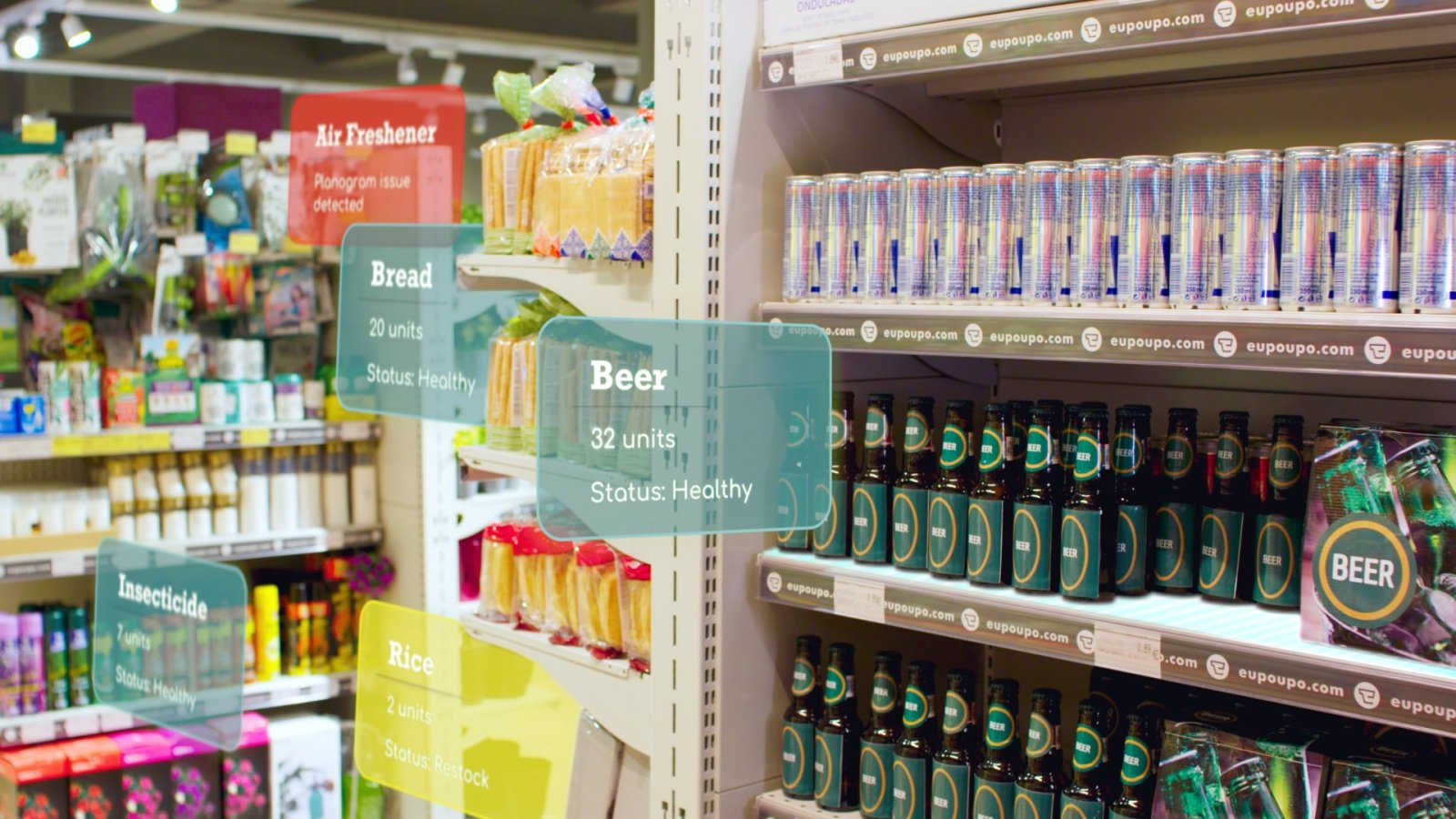
By 2036, shelving intelligence is now standard. Smart shelves monitor stock levels, triggering alerts that guide staff when attention is needed – transforming what began as simple inventory data into a sophisticated decision-support ecosystem.
By 2036, the "Camera vs. Paper" debate was settled. PaperWeight AI became the standard for high-density NYC retail because it solved the "Trilemma" of Scalability, Cost, and Accuracy.
The comparison that drove the shift was stark:
Without being familiar with the technology, Maria could measure daily the benefits of what her local market had built with its invisible support. Retail stores became smaller and better integrated into urban communities. The architecture itself was branded in relation to its local community.
Maria greets Pérez, a staff member she’s known for years. In 2025, Pérez’s job would have been "stocker" – a robotic loop of checking for empty spots. In 2036, Pérez is a "Community Curator."
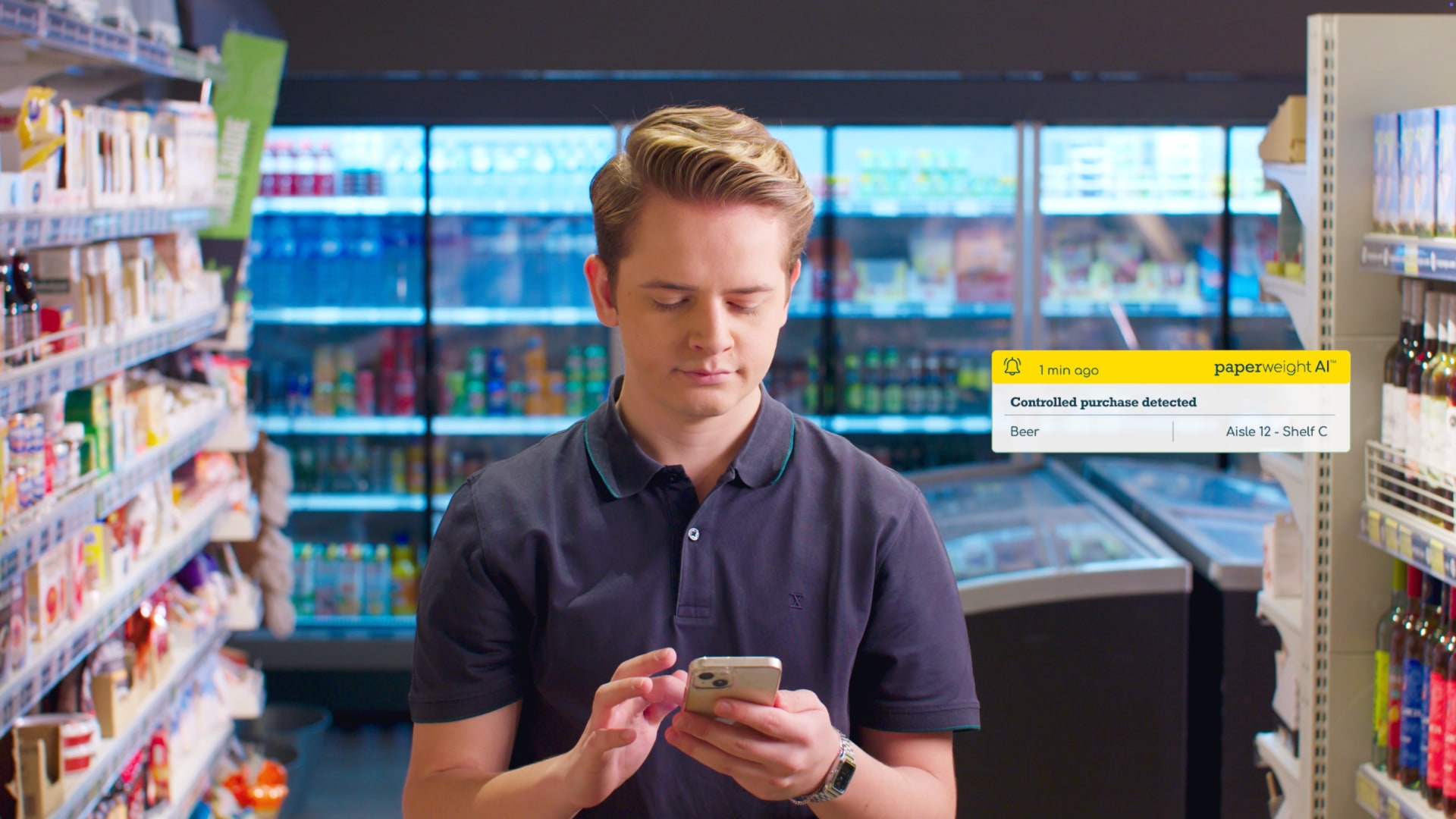
Because PaperWeight AI is agentic – meaning it autonomously triggers restocking orders to the backroom bots or suppliers the second an item count drops – Pérez doesn't worry about logistics. The shelf manages itself.
Freed from the drudgery of the manual audit, Pérez uses his handheld not to scan barcodes, but to review customer sentiment trends. He suggests a new line of spicy honey to Maria, based on the store’s aggregate data showing a spike in cold meats purchases for the weekend.
With AI handling the logistics backbone, Pérez grew into a skilled data reader and interpreter, growing passionate about being a CX Analyst. The fear of losing his job to AI transformed into a dispassionate partnership with AI knowledge. If AI were recognized as more effective than humans for straightforward logistics and inventory matters, it would give room for humans to use their uniqueness in social skills with nuanced interactions.
The technology empowered the staff by becoming invisible. It was the "Source of Truth" for inventory, allowing humans to be the source of empathy.
Maria granted her loyalty to the smiling octopus brand for its transparency of CX methods and its focus on sustainability in product selection. She particularly loved finding new suggestions that felt specifically designed for her. It felt as if her Spotify playlist suggestions had expanded to her shopping options.
Maria picks up a package of sea bass from her preferred section in the store. On the label sits a tiny, unassuming tag – a PetriTag®. This is another innovation from the same Portuguese CoLab. It’s a biodegradable sensor that monitors bacterial levels in real-time. If the fish were compromised, the tag would change color.
Like the shelf sensors, PetriTag® proved that the most sophisticated solutions often came from the simplest materials: paper, doing what complex electronics couldn’t affordably or sustainably do. It provides Maria with absolute trust in the product without requiring a battery or a microchip.
As Maria checks out – a seamless process where the shelves have already tallied her "virtual cart" based on weight removal – she walks back out into the NYC heat.
The tech giants of the 2020s bet that AI would replace people like Pérez. They were wrong. They thought, erroneously, that the value of retail was in the transaction, and not in the trust
PaperWeight AI proved that when you use technology to handle the "boring" physics of logistics – using a pixel sensor matrix to guarantee the right product is in the right place at the right time – you don't erase the human worker. You elevate them.
The winners of the AI revolution weren't the ones who built the biggest data centers. They were the ones who realized that the most advanced technology is the kind you don't even see.
Technologies like PaperWeight AI offer the tools. Retailers, staff, and communities must provide the vision.

AlmaScience is a collaborative innovation R&D lab and a technology incubator for sustainable functional materials and green electronics.

Stay in the loop with the latest news and events from the Sustainable Innovation Ecosystem