

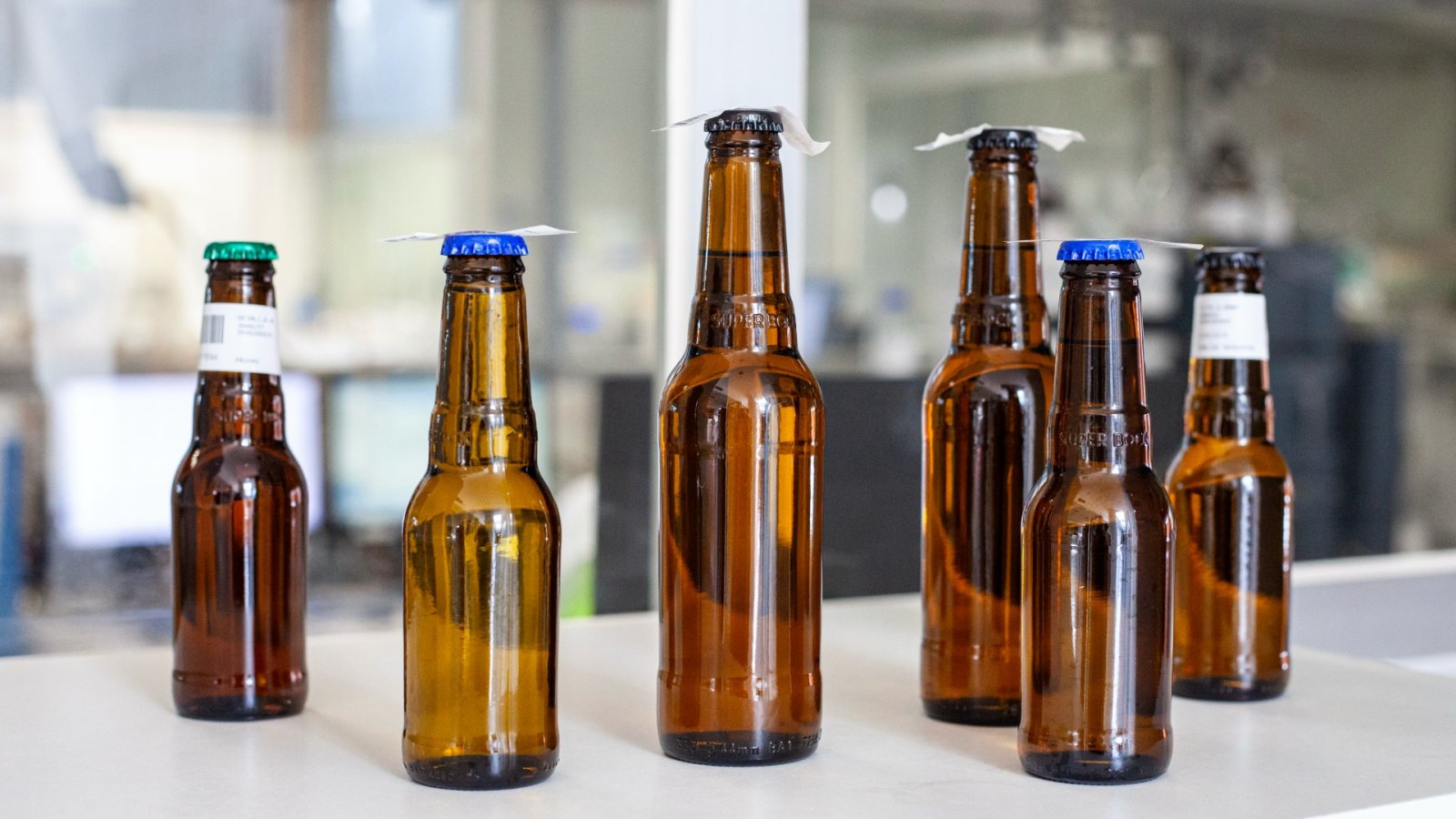

Stay in the loop with the latest news and events from the Sustainable Innovation Ecosystem

In the rearview mirror of summer, we examine the rapid consequences of a fast-changing natural landscape through the lens of Comporta.
The rising star of Portugal, breakout destination Comporta on the Troia Peninsula, has been swept into a luxury real estate frenzy over the past decade, attracting an increasing number of foreign investors drawn to a powerful narrative of "luxury meets simplicity" – a compelling myth built around this secluded and unspoiled stretch of land epitomized by its fishing villages, rice fields, and expansive sandy coastline.
The symbiotic premise that "simplicity is luxury" has progressively transformed Comporta from a modest fishing village of 1094 residents in 2021 to one of Portugal's most coveted luxury property markets. Intense foreign investment has contributed over a decade to turning this unique piece of geography into a high-end holiday destination.
But like other treasures of natural beauty, the ecological risks that overnight success stories carry in their wake may soon manifest as damaging impacts to the ecosystem and community.
In this article, we explore how civic responsibility paired with effective technological responses can change this trajectory.
In Portugal, every 30 minutes daily, a green ferryboat departs from the port city of Setúbal toward the Troia Peninsula. Its iron belly carries passengers, vans, cars, bikes, and goods to be dropped on the thin sandy peninsula where the village of Comporta broadcasts its melody so widely.
Cycle to Comporta and you'll be struck – soon haunted – by the harrowing spectacle of human-induced consumption waste.
On your left, luxury BMWs, Teslas, Opels, and Mercedes race in acceleration to reach the promised land of secluded simplicity, overtaking construction trucks and delivery vans also hurrying to build the foundations of one of the most spectacular real estate transformations.
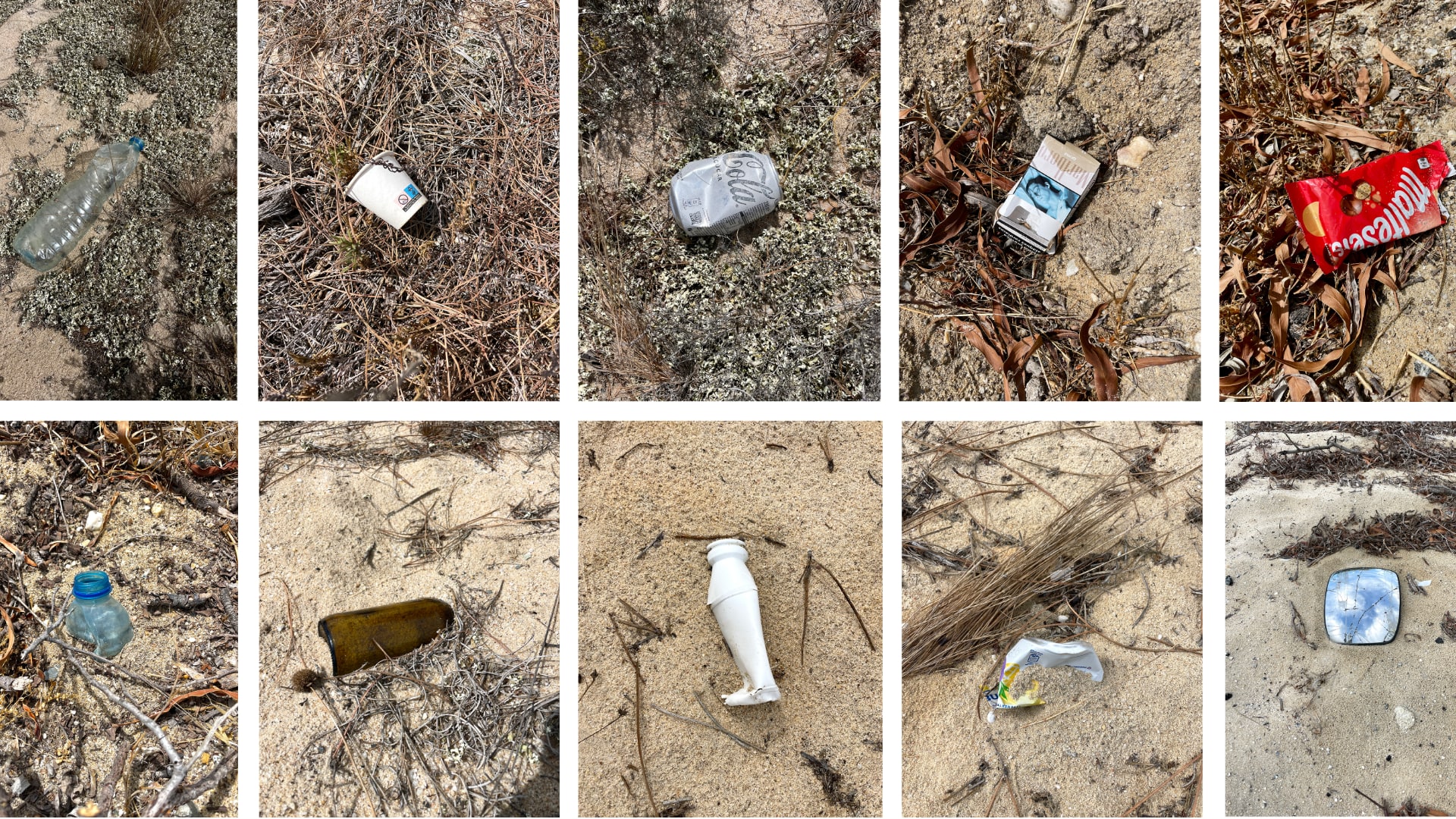
On your bike – out of survival instinct, really – you'll find yourself cycling ever closer to the right edge of the road. That's where, silent and inquisitive, everyday consumption products left behind stare at you. Some are buried up to their necks in the sand; others hang precariously in entangled bushes. All seem to whisper a persistent plea to be noticed, to finally be picked up, to not be held responsible for the pollution of careless others.
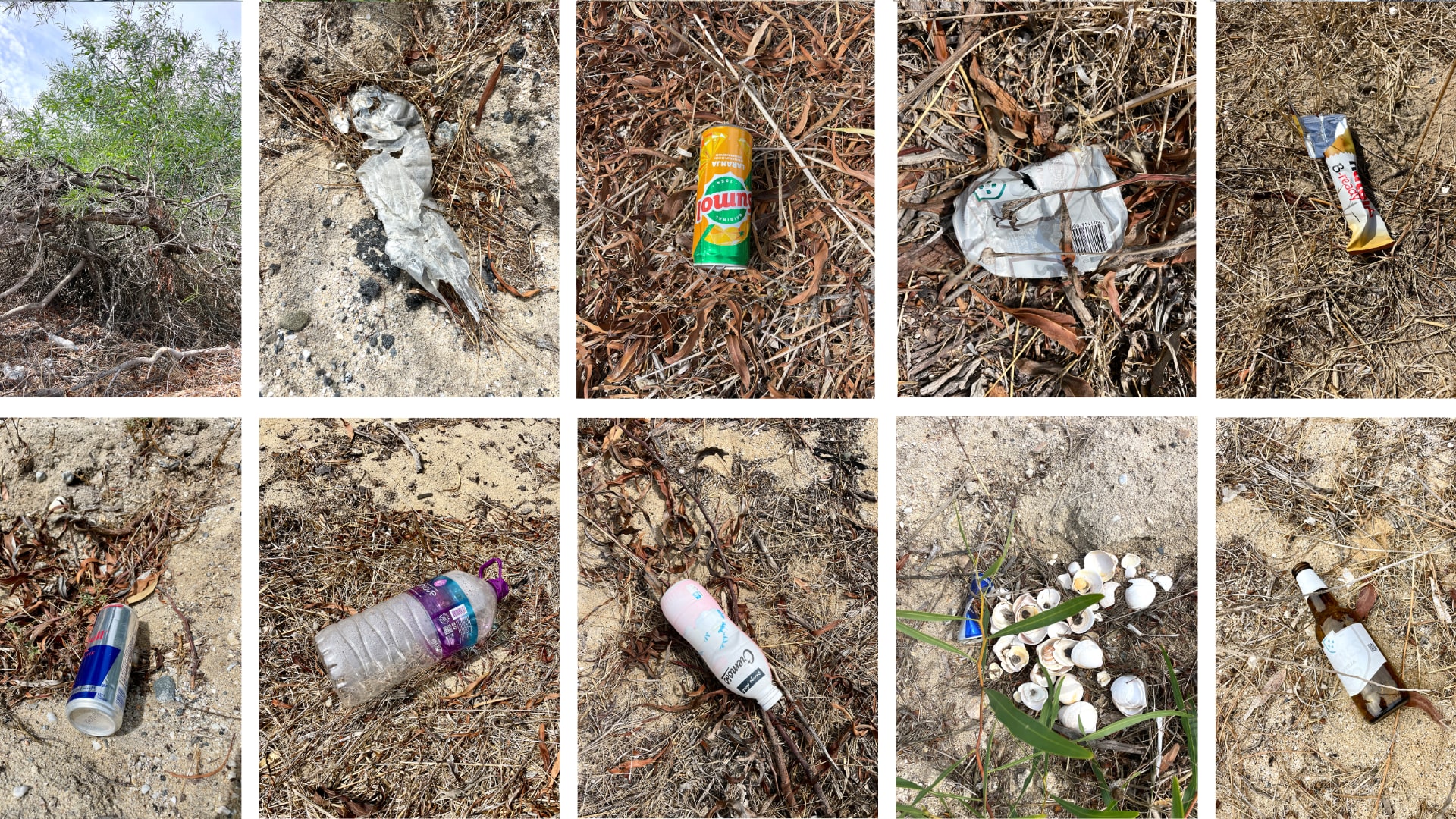
You'll find relics of soft drink cans, glass bottles stripped of their labels by the wind, plastic bottles perforated by time, a wounded kite still swinging, an abandoned jerry can, cigarette packs, a car rim, various toys, and even the pink sole of a child's shoe. All are now vestiges of the celebrated nature featured in luxury brochures.
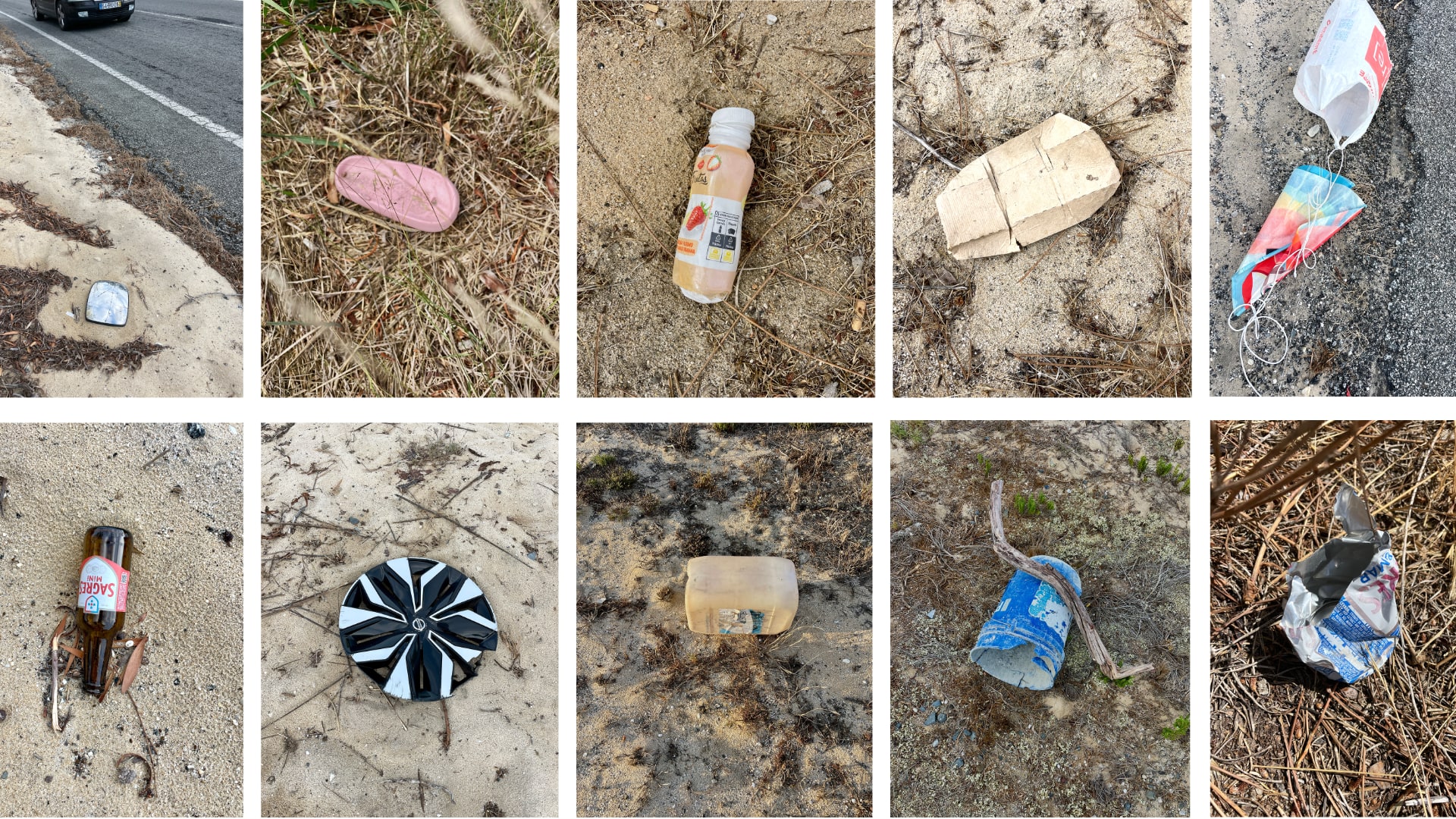
These neglected objects, excluded from the advertised unspoiled nature, form a reality that someone in the village swiftly comments on: "We all know about it, but we choose to turn our eyes away".
This reminded me of a SmartPack by AlmaScience short video. In the video, we see several glass and mainly plastic packaging left behind as dirt, as a somber voice announces: “Here they are. The throwaways. Empty. Purposeless. Just wasting in the streets”. The video then proceeds to show how AlmaScience is empowering paper-based, innovative packaging solutions with exceptional recyclability.
From Cais Sul, the ferry station south of Troia, it takes roughly 15 minutes by car on the N253-1 and N261 roads to reach Comporta, approximately 20 kilometers away. Along these roads, no garbage bins are visible until you're welcomed to Comporta by Museu do Arroz.
When left unchecked, the danger of questionable human habits is the risk of becoming viral and uncontrollable. Littering the roadsides without intervention might invite more litter soon in a geography that has gained attention and desire.
Dealing with packaging waste needs both behavioral changes – that’s upon end consumers of packaged goods – and technological advances – and that’s up to AlmaScience and other green tech laboratories developing innovative concepts for preventing and combating current and future human-generated waste.
At AlmaScience, we believe that innovative concepts and scalable solutions can together stand for the preservation of our beloved sandy landscapes from Melides beach to the tip of the Tróia Peninsula, and from the port city of Setúbal to Costa da Caparica, where our headquarters is located, hosting close to 30 PhD researchers in biochemistry, advanced materials, paper and printing techniques, electronics, and more, working together to tackle difficult challenges such as modern, connected packaging.
What if “luxury is simplicity” was more than exclusive access? What if instead it meant the knowledge that your footprints leave the sand even cleaner than you found it? At AlmaScience, we are ready to turn that "what if" into reality, one sustainable innovation at a time!
This is not to say that preserving this rare natural environment and its original built environment wasn't a priority. On the contrary, the preservation of the Herdade da Comporta, which forms most of its territory, was a high priority for the owners as they gradually released their parcels for sale.
Real estate development in the region underwent thorough curation that helped transform the land and habitat into carefully crafted luxury eco-resorts over a decade, with consideration for preserving the ethos of the original architecture and its natural landscape. What began as a place mostly catered to European elites has expanded into a global attraction for the wealthiest and those who gravitate around its scenes.
We owe this land – as well as its generations of fishermen and ancestral inhabitants, its new residents and increasing visitors – the preservation of the pristine feeling of peace and safety conveyed by both the natural environment and the unique resorts such as Sublime Comporta and other architectural wonders developed in the region.
Timeline
1836 – The estate is formally constituted by the Companhia das Lezírias as a Crown agricultural estate.
1925 – The estate is sold to the British company The Atlantic Company, Ltd.
Mid-1950s to 1987 – Estate activity and modernization occur mid-20th century with agricultural improvements following acquisition by the Portuguese banking dynasty, the Espírito Santo family.
1991 – The development of Comporta as a high-end destination starts. The estate was developed for tourism and high-end projects alongside agriculture. This date is often cited as the start of the "modern Comporta project".
2014–2016 – Banco Espírito Santo collapses. Assets are placed in resolution and liquidation. Herdade da Comporta is put up for sale. After the collapse/resolution of Banco/Grupo Espírito Santo (2014), related family assets including the Herdade came under court scrutiny and disposal processes; reporting shows the estate was placed into sale/liquidation procedures in the years following the bank collapse.
2019 – Major Comporta assets are sold to a consortium led by Amorim Luxury (Paula Amorim) and including Port Noir/Vanguard Properties (Claude Berda/Vanguard). The acquisition is finalized in November 19. The acquired parcels, Comporta Dunes (~1,010 hectares + 460 hectares of protected forest) and Torre (365 hectares) were sold by Gesfimo for €157.526 millions.
A few days after my visit to Comporta, I went camping with a friend in the area between Melides and Sines, taking the Setúbal ferry. The litter I photographed on my bike ride to Comporta is hardly visible from a car, I realized.
Then came the next morning. When I woke up, I found all these UFOs of modern-day consumption there too. This time, it didn’t feel enough to just photograph. I pick them up. Four bags were ready for the bin.
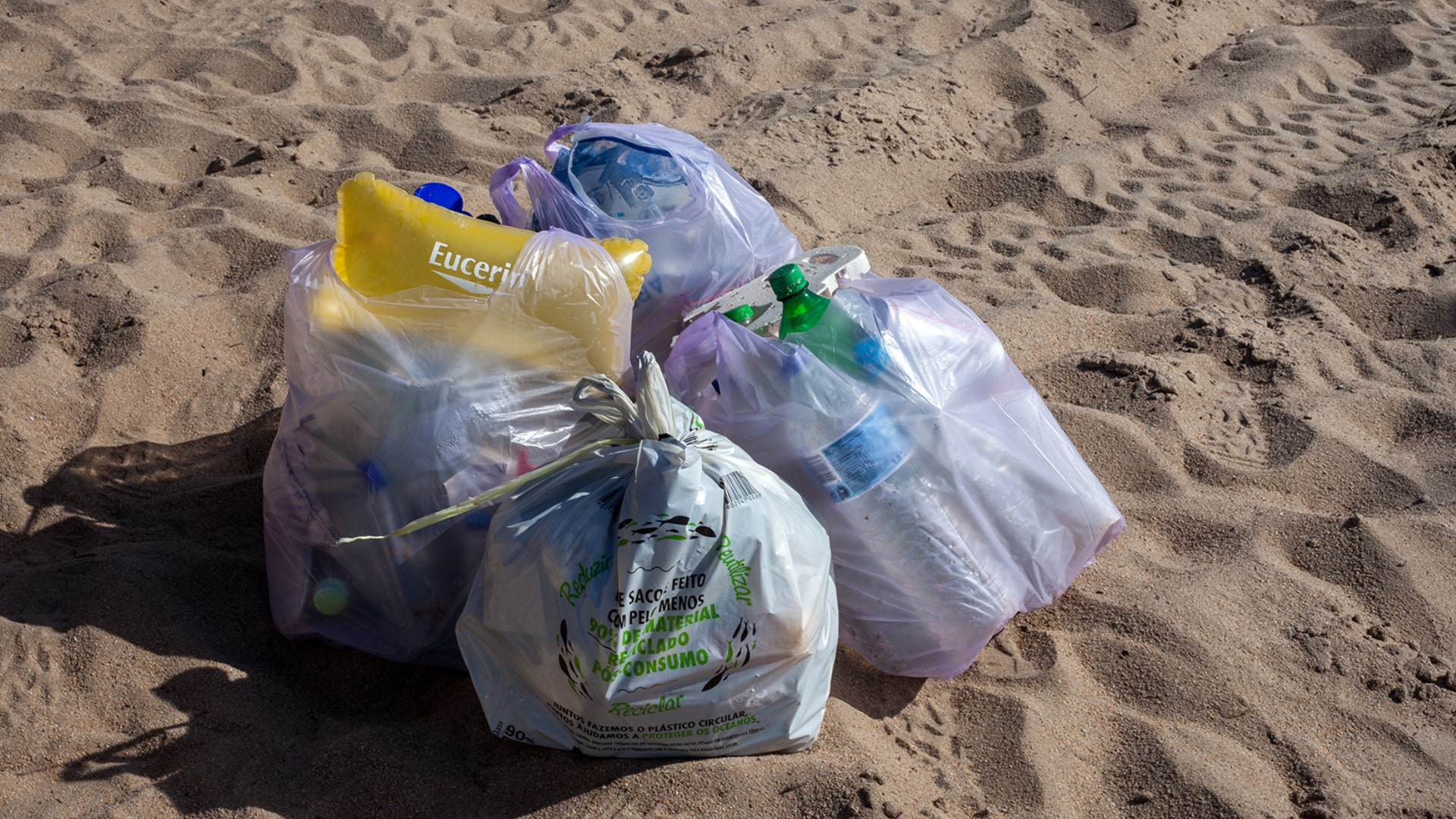
In the afternoon came an ICNF (the Portuguese Institute for the Conservation of Nature and Forests) agent with his daughter. He said that tents were not allowed in the area, but motorhomes were. My friend and I folded the tent, and as I had picked up the trash, we were not fined. Instead, he and his daughter agreed to take the bags and discard their contents.
If people are not fined for littering, it won't stop. But to be fair, I walked for at least an hour along the stretch of beach before finding a restaurant and, therefore, bins. No bins were available otherwise. I also noticed that among what I had picked up, several items were leftovers from fishermen's equipment. Seizing this pivotal moment requires more than observation – it demands action.
Culture can be changed – the science of behavioral shifts proves it. What appears as difficult, long-term work is actually a catalytic moment: citizens, residents, investors, nature-preservation organizations, and sustainable innovation-focused Portuguese CoLABs converging on a shared mission.
History shows that environmental tipping points occur not through single actions, but through coalitions committed to measurable, scalable solutions.
What we're witnessing isn't just environmental pressure; it's an opportunity to demonstrate that rapid development and ecological preservation can coexist through intentional collaboration and smart technology, the kind pioneered by AlmaScience.

AlmaScience is a collaborative innovation R&D lab and a technology incubator for sustainable functional materials and green electronics.

Stay in the loop with the latest news and events from the Sustainable Innovation Ecosystem